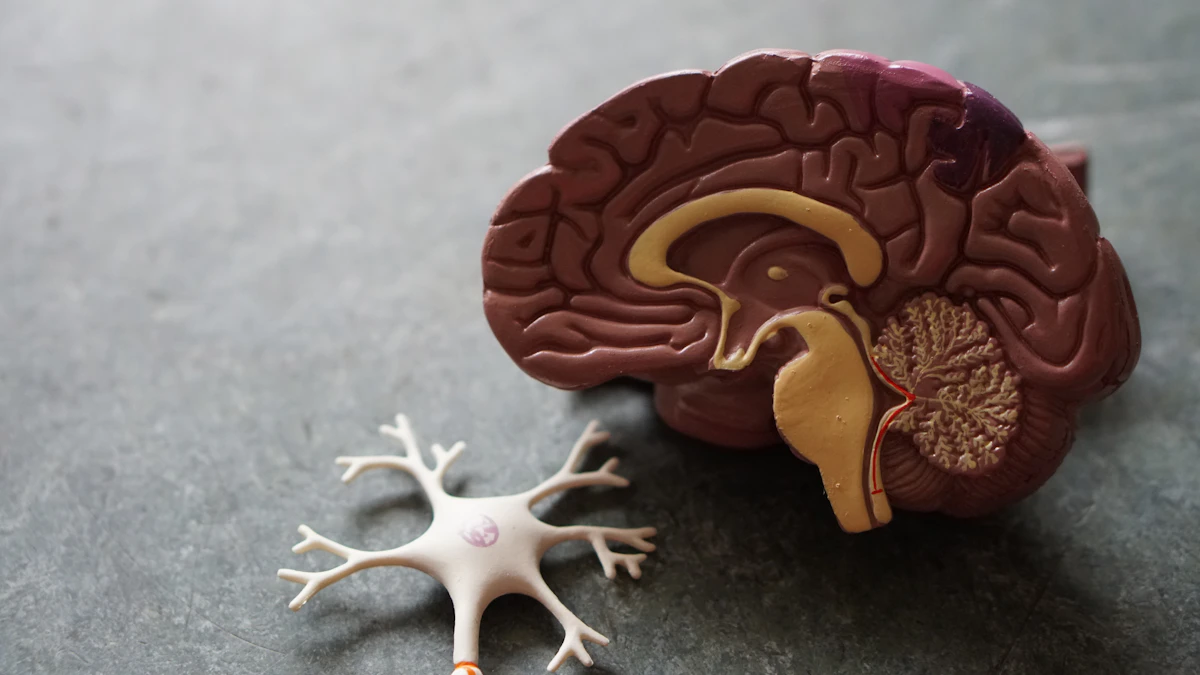
In our traditional education system, success is often measured by a student's ability to memorize vast amounts of text, perfectly spell complex words, and follow linear, step-by-step instructions. But what happens when a brain is fundamentally wired to reject this linear processing?
Welcome to the world of Dyslexia. Often misunderstood as merely a "reading disorder" or "letter-swapping" problem, dyslexia is actually a profound variation in neurological architecture. At Virtual Science Club Bangladesh (VSC.BD), we firmly believe that to break the cycle of rote memorization, we must understand and embrace divergent thinking. This log explores how the dyslexic mind is perfectly engineered for robotics, coding, and complex problem-solving.
1. The Architecture of the Dyslexic Brain
To understand dyslexia, we must look at functional Magnetic Resonance Imaging (fMRI) scans. In a neurotypical brain, reading and processing heavily activate the left hemisphere—specifically areas related to language, sequential processing, and precise timing.
A dyslexic brain, however, shows significantly less activation in these left-hemisphere regions. Instead, it compensates by heavily recruiting the right hemisphere and the frontal lobe. The right hemisphere is the brain's engine for spatial reasoning, 3D visualization, pattern recognition, and big-picture conceptualization.
// THE_ENGINEERING_ADVANTAGE
Because the dyslexic brain relies heavily on the right hemisphere, these individuals often possess an extraordinary ability to visualize complex 3D structures in their minds. Before a single line of CAD is drawn or a piece of metal is cut, a dyslexic engineer can mentally rotate and test a robotic chassis from every angle.
2. Linear vs. Divergent Processing
Traditional education is built on Linear Processing (A leads to B, which leads to C). It is predictable, easy to test, and perfectly suited for rote memorization. However, real-world engineering—like debugging a corrupted drone flight controller or designing an autonomous rover—rarely follows a straight line.
Dyslexic individuals are natural Divergent Thinkers. They process information simultaneously from multiple angles. When faced with a problem, they don't start at step one; they look at the final goal and intuitively see the interconnected web of solutions required to get there. This is why many dyslexic students struggle with traditional exams but excel dramatically in practical laboratory environments.
 Fig 2.0 - Divergent processing allows for simultaneous pattern recognition across multiple data streams.
3. Coding: The Dyslexic Paradigm
It might seem counterintuitive that individuals who struggle with written language would excel at programming languages. Yet, the tech industry is filled with highly successful dyslexic developers.
Why? Because coding is not writing; it is architecting logic. A codebase is a massive, interconnected 3D structure of functions, classes, and variables. A dyslexic programmer doesn't just read the code top-to-bottom; they visualize the entire architecture of the software. Let's look at a pseudocode representation of this cognitive difference:
// Traditional Linear Cognitive Approach
void solveProblemLinear(Problem p) {
    for (int step = 1; step <= p.totalSteps; step++) {
        readManual(step);
        execute(step);
        if (fails()) { return error; } // System halts
    }
}

// Dyslexic / Divergent Cognitive Approach
Solution solveProblemDivergent(Problem p) {
    MentalMap map = visualizeEntireSystem(p.endGoal);
    Array patterns = findHiddenConnections(map);

    // Bypassing linear steps to build an innovative solution
    Architecture newDesign = connectNodesSimultaneously(patterns);

    return newDesign.deploy();
}
4. VSC.BD's Mission: Embracing Neurodiversity
At Virtual Science Club Bangladesh, our core philosophy is to replace rote memorization with logical engineering. This mission inherently supports neurodivergent students who have been marginalized by a system that grades them entirely on their ability to memorize textbooks.
We focus on Project-Based Learning (PBL). When a student builds a Smart Classroom Monitor or an Autonomous Rover, they aren't reading about physics; they are touching it, testing it, and experiencing it. For a dyslexic mind, this hands-on, multi-sensory approach is the key to unlocking their true potential.
5. The Final Takeaway
Dyslexia is not a deficit; it is a trade-off. What the brain sacrifices in rapid phonological processing, it gains in hyper-spatial awareness, out-of-the-box creativity, and big-picture engineering.
If we want to lead the next technological revolution in Bangladesh, we cannot afford to lose the brilliant minds that think differently. It is time we stop forcing divergent thinkers to act like linear processors, and instead give them the tools—the microcontrollers, the soldering irons, the IDEs—to build the future.